If you are considering downsizing in Palm Beach County, a condo can offer the lowest-maintenance path to your next chapter: a home in a managed building, with shared amenities, exterior upkeep handled, and a footprint sized to what you actually use. Condos appeal to downsizers who want a simpler routine, freedom to travel, or a walkable coastal and urban location where single-family homes are scarce or expensive. This guide covers what condo living really means here, what your monthly fee does and does not cover, the documents Florida law requires you to receive, the building-safety rules that matter, and a checklist to run on every building you tour.
You do not need to become a condominium-law expert to make a confident choice. Knowing a handful of questions about fees, documents, and building condition will help you compare properties far more effectively than touring alone.
Hi, I am Rhonda Townsend, a Realtor with the 1st Real Estate Solution Inc. team. For more than 12 years I have helped Palm Beach County homeowners buy and sell everything from waterfront towers to garden-style complexes, including many clients who chose a condo as their next home. If you want the full picture first, browse the Downsizing Resource Center, then keep reading for the condo breakdown.
Key Takeaways
- A condo is a unit in a managed building or complex, and your monthly assessment usually covers shared upkeep, common-area insurance, amenities, and building coverage, but it does not cover everything.
- Florida law requires condo sellers to provide specific documents, and buyers keep a right to cancel after receiving them: seven business days on a resale, with a longer window on new construction.
- Florida's building-safety rules require milestone structural inspections and structural integrity reserve studies for condo buildings three or more stories, and reserve funding for those components can no longer be waived.
- Review the association's budget, reserves, rules, meeting minutes, and insurance before you make an offer, because the monthly fee is only part of the cost picture.
- A local Realtor who knows condo buildings can compare fees, documents, and building condition so your next chapter starts on solid footing.
What Does Condo Living Actually Mean in Palm Beach County?
In Florida, a condominium is a legal form of ownership, not just a building style. You own your unit, you share ownership of the common areas with every other unit owner, and the condominium association manages the property under the Florida Condominium Act, which is Chapter 718 of the Florida Statutes. The association collects monthly assessments, maintains the buildings and grounds, and enforces the rules that unit owners agree to follow.
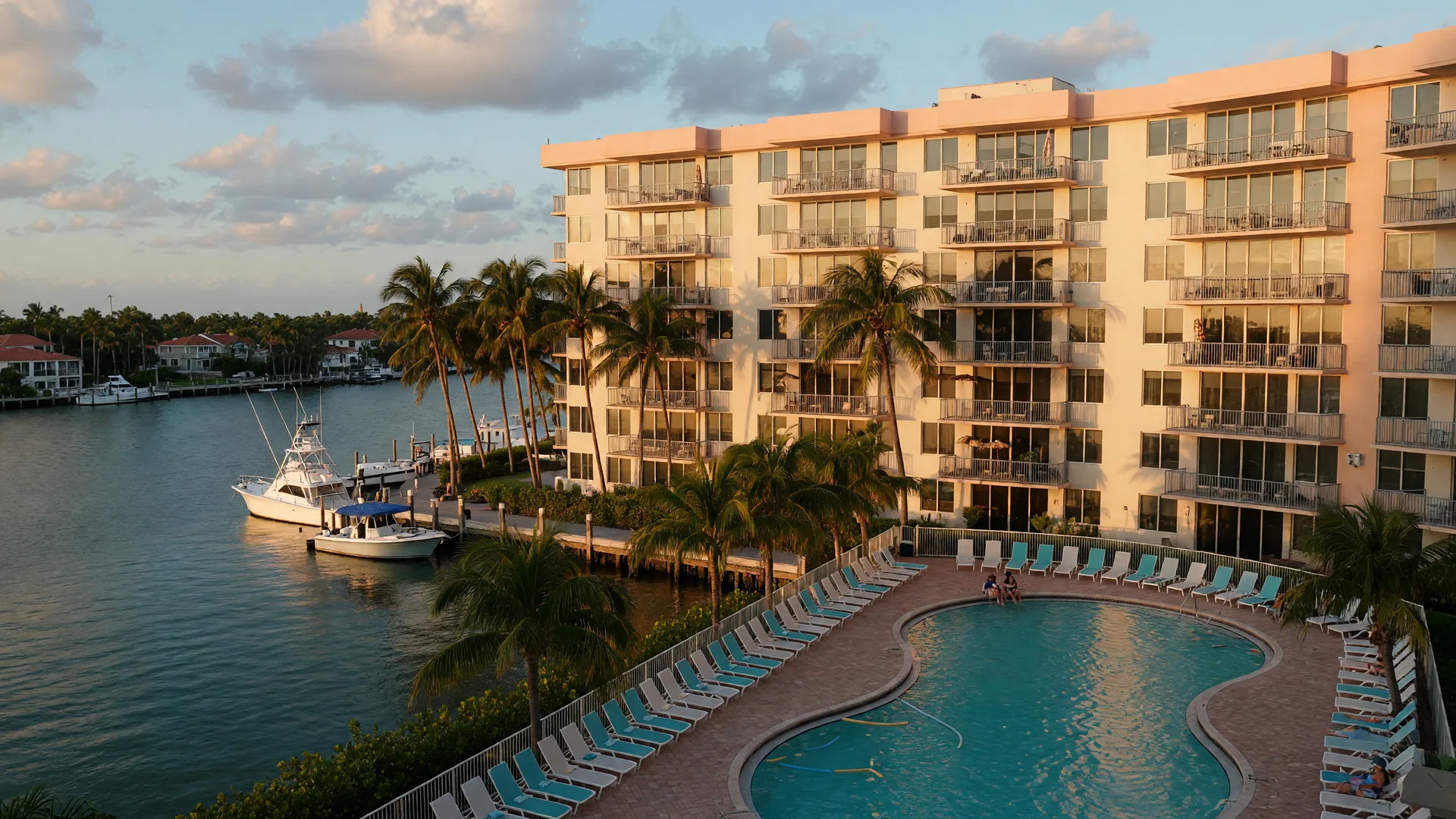
Palm Beach County's condo stock runs the full range: mid-rise and high-rise towers along the ocean and the Intracoastal, garden-style complexes wrapped around pools and lakes, and smaller boutique buildings in walkable downtowns. For a downsizer, condo living generally trades exterior responsibility and yard work for a monthly fee, shared rules, and neighbors in the same building. Whether that trade works for you depends on how you want to spend your time and your budget.
Why Do Downsizing Homeowners Choose Condos?
A few reasons come up again and again when homeowners describe why a condo became their next home:
- Least exterior responsibility. The association typically handles the roof, exterior walls, landscaping, and common-area upkeep, so weekends are yours.
- Shared amenities without the upkeep. Pools, fitness rooms, clubhouses, and in some buildings concierge services come with the community rather than a personal maintenance list.
- Lock-and-leave freedom. Secure entries and managed grounds make travel easier, because the property is looked after while you are away.
- A floor plan matched to your life. Condo sizes range from one-bedroom units to spacious three-bedroom residences, so you can match the space to what you actually use.
- One payment for most routine costs. The monthly assessment bundles most upkeep expenses, which simplifies budgeting, though the total can change as the association sets future budgets.
What Do Condo Fees Cover, and What Do They Not?
A condo fee, usually called a maintenance assessment, is set by the association and typically covers the building's exterior maintenance, common-area landscaping and utilities, amenities, the association's master insurance policy, and contributions to reserves for future repairs. What the fee does not cover is just as important: your personal belongings, your unit's interior finishes, and improvements beyond the original build, such as upgraded counters or custom storage. Policies vary from one building to another, so the only reliable method is reading the budget and the declaration for the specific association.
Two buildings with similar addresses can have noticeably different fees, because each has its own amenities, age, insurance costs, and reserve needs. Budget for the fee itself, the annual property taxes, your own HO-6 insurance policy, and the possibility of a special assessment when the board raises money for a large repair beyond the reserves. The HOA fees and condo association guide on the Resource Center digs into reserves, special assessments, and the questions worth asking.
What Documents Should You Review Before You Make an Offer?
Florida law is explicit about the paperwork in a condo purchase. Under Florida Statute 718.503, the seller must provide a current copy of the Declaration of Condominium, the association's Articles of Incorporation, the Bylaws and Rules, the most recent year-end financial statement, and the approved annual budget. On a resale, the buyer's right to cancel the contract runs for seven business days after signing and receiving those documents, and weekends and legal holidays do not count toward that window. That right cannot be waived. On a new construction purchase from a developer, the law gives a longer cancellation window of 15 days, and the developer cannot close inside that window.
What should you look for inside those documents? The rules tell you how many units can be rented, whether pets are allowed, how the board is elected, and how much the reserves hold. If a pet is part of your household, our guide to downsizing with pets in Palm Beach County explains how pet rules work across condo and HOA communities. The financials reveal whether the association pays its bills on time and whether special assessments have been common. Take the time to read them with a real estate attorney or your Realtor before you sign, and do not let anyone rush the review. The making-an-offer guide covers how to build the contract around these documents.
What Are the Building-Safety Rules Condo Buyers Should Know?
Florida's 2022 condominium safety law added structural requirements that matter when you shop. For condominium and cooperative buildings with three or more habitable stories, the law requires a milestone structural inspection by a licensed architect or engineer at 30 years of age, or at 25 years for a building within three miles of the coast where the local enforcement agency requires it, with the inspection repeated every 10 years. The first phase is a visual review of the primary structural members; the second, deeper phase happens only when the first phase finds substantial deterioration.
The same law requires a structural integrity reserve study, or SIRS, for those buildings every 10 years. The study evaluates the condition and remaining useful life of components such as the roof, load-bearing walls, waterproofing, fire protection, and mechanical systems, and it produces a funding plan. For association budgets adopted on or after January 1, 2025, money for the SIRS components can no longer be waived or reduced. In practice, that means asking how old the building is, when the last milestone inspection and reserve study were completed, what condition they found, and what the association's funding plan shows. The association is required to share summaries with buyers, and they belong in the documents you review before closing. Lower-rise condos, and properties governed by homeowners associations under Chapter 720 of the Florida Statutes, do not fall under these particular milestone rules, one of several practical differences between a condo and a villa community.
What About Insurance on a Condo?
The association's master policy typically protects the building and the common areas, while your own policy covers your personal belongings, your interior finishes, and your personal liability. In Florida that personal coverage is commonly an HO-6 policy, and it is not optional in practice: lenders usually require it, and it protects the parts of the home you are responsible for. Flood insurance is separate, and it is required when the unit sits in a special flood hazard area and you carry a federally backed loan. Ask for the master policy's limits and deductibles, the flood zone for the exact address, and premium history for the unit. The insurance guide for downsizers and the flood zones guide walk through both topics in detail.
Where Are Condo Communities Common in Palm Beach County?
Condos appear in nearly every part of the county, and the best choice depends on how you want to live. West Palm Beach's urban core and waterfront offer high-rise living within steps of restaurants, arts, and the water, as the West Palm Beach downsizing guide describes. Along the coast, Boynton Beach, Delray Beach, and Lake Worth Beach mix mid-rise and garden-style complexes at varied price points. Farther north, Jupiter, Palm Beach Gardens, and North Palm Beach carry the options from Intracoastal towers to resort-style communities, and inland towns such as Wellington hold condo and villa developments of their own. The best communities for downsizing article and the community guides help you shortlist with purpose.
The Condo Downsizing Checklist
Run this checklist on every building you seriously consider:
- ✓ Confirm the building's age and whether the milestone inspection and structural integrity reserve study are complete and current.
- ✓ Read the declaration, bylaws, rules, approved budget, and year-end financial statements.
- ✓ Ask for recent meeting minutes and check for pending special assessments or planned fee increases.
- ✓ Review the rental rules, leasing caps, pet rules, and guest policies against your plans.
- ✓ Get the master insurance policy summary, including deductibles, and a flood quote for the exact unit address.
- ✓ Look up the flood zone for the property on the current FEMA maps.
- ✓ Add up the full monthly picture: assessment, taxes, HO-6 premium, flood premium, and the reserves outlook.
- ✓ Visit at different times of day, walk the building, and talk with residents about noise, parking, and management.
- ✓ Have an attorney or your Realtor review the documents inside your cancellation window.
Selling Your Current Home Before Buying a Condo?
Most downsizing homeowners want to know their sale proceeds before they commit to a condo, which points toward listing first. Others prefer to secure the condo and then sell, using negotiated closing dates, lease-backs, or a bridge loan to cover the gap. Both paths work when the coordination is planned early. The sell and buy strategy guide lays out the timing options, and the financing guide covers how proceeds and loans come together.
How Rhonda Townsend Helps You Find the Right Condo
Finding the right condo means matching a building, a budget, and a community to the way you want to live, and that is where local experience matters. I help downsizing clients:
- Understand what their current home is likely worth before they shop.
- Compare buildings across the county on the dimensions that matter: fees, reserves, rules, age, and amenities.
- Review the condominium documents and financials alongside the contract.
- Coordinate inspections, insurance, financing, and the sale of the current home through one team.
- Negotiate with the confidence that comes from knowing what each building is really like.
Explore the home options page to see condos against villas, townhomes, and single-story homes, and download the free Palm Beach County Downsizing Guide to bring the whole plan together.
If you have been wondering whether a condo belongs in your next chapter, the best next step is a conversation. Schedule your FREE Downsizing Consultation today. We will talk through your goals, your budget, your timeline, and what your current home may be worth, with no pressure and no obligation. You can also reach out directly any time.
Frequently Asked Questions
Are a condo fee and an HOA fee the same thing?
Not exactly. Condominiums are governed by the Florida Condominium Act in Chapter 718 of the Florida Statutes, while traditional homeowners associations follow Chapter 720. A condo assessment usually includes a share of the master building insurance, while an HOA fee typically covers neighborhood common areas and amenities. Both deserve the same discipline: read the budget, the reserves, and the rules before you buy.
Can I cancel a condo purchase contract after signing?
On a resale, yes, inside the window Florida law provides. After you sign and receive the required documents, you generally have seven business days to cancel, with weekends and legal holidays excluded, and the right cannot be waived. New construction from a developer carries a longer window of 15 days, and the developer cannot close inside it. Review the documents promptly so you have time to make a careful decision.
Do all Florida condo buildings need milestone inspections?
The milestone inspection requirement applies to condominium and cooperative buildings with three or more habitable stories, beginning at 30 years of age, or 25 years near the coast where the local enforcement agency requires it, and repeating every 10 years. Lower-rise buildings fall outside those particular rules, which is one reason building age and construction type belong in your checklist.
Does the condo fee include my homeowners insurance?
The master policy covers the building and the common areas. Your personal belongings, interior finishes, and liability are your responsibility under an HO-6 policy, and flood coverage is separate. Ask for a written summary of the master policy, its limits, and its deductible, and get quotes for the exact unit before you commit.
Is a condo a good fit if I want the least possible maintenance?
For many downsizers, yes. Condos generally place the smallest share of property upkeep on the owner. The trade-offs are the monthly assessment, the association's rules, and shared walls. Comparing a few buildings and reading their documents is the way to know whether the fit is right for you, and our condo versus villa versus townhome comparison helps with that.
Related Resources
- Downsizing Resource Center - Browse the full library of guides and insights for Palm Beach County moves.
- Condo vs. Villa vs. Townhome - A side-by-side comparison of the main low-maintenance home types.
- HOA Fees, Condo Associations, and Special Assessments - The full breakdown of fees, reserves, and governance.
- Insurance Guide for Downsizers - Master policies, HO-6 coverage, flood, and wind.
- Making an Offer on a Downsize Home - Structure a competitive offer with the right contingencies.
- Financing Your Next Home - How sale proceeds and loans come together.
- Sell and Buy Strategy - Coordinate the sale of your current home with the purchase of your next one.
- The Palm Beach County Downsizing Guide - A free downloadable resource that brings the whole plan together.
- Contact Rhonda Townsend - Start the conversation whenever you are ready.
Sources
- Florida Statutes, Section 718.503: Requirements for contracts for sale of condominium parcels
- Florida Statutes, Section 718.112: Bylaws, structural integrity reserve studies
- Florida Statutes, Section 553.899: Milestone structural inspections
- Division of Florida Condominiums, Timeshares, and Mobile Homes, DBPR
- Florida Realtors: Florida HOA and Condominium Laws
- Florida Office of Insurance Regulation
- Palm Beach County Government
- Palm Beach County Property Appraiser
Disclaimer
This article is for general educational and real estate information purposes only. It does not provide legal, tax, financial, or insurance advice. Condominium documents, fees, reserves, insurance requirements, and building regulations vary by property and change over time. Always review the current association documents, confirm building inspection records, obtain quotes from licensed professionals, and consult licensed advisors for guidance specific to your situation.

Written by Rhonda Townsend
1st Real Estate Solution Inc. Broker Associate · 12+ Years in Palm Beach County
Have questions about your downsizing journey? I'd love to have a conversation. No pressure, no obligation — just honest guidance from someone who understands.
Schedule a Free ConsultationRelated Reading
- Condo vs. Villa vs. Townhome: Choosing Your Next Home
- HOA Fees, Condo Associations, and Special Assessments
- Insurance Guide for Downsizers (Flood, Wind, HO-6)
- Making an Offer on a Downsize Home
- Villas in Palm Beach County: A Complete Guide
- West Palm Beach: Urban Coastal Living
- The Complete Guide to Downsizing in Palm Beach County
- Condos vs. Villas for Downsizers: How to Choose
- Townhomes for Downsizers: A Complete Guide