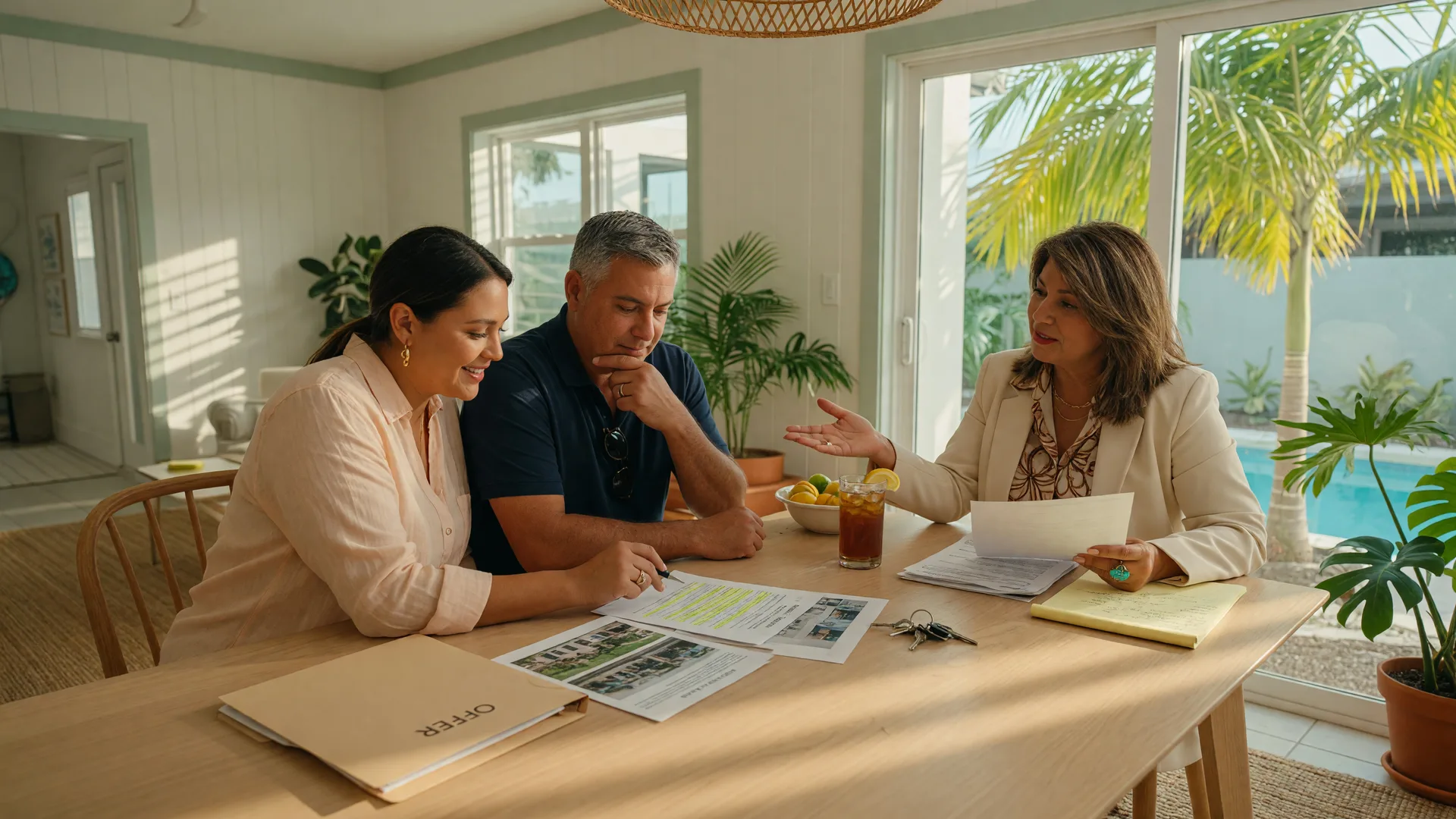
Making an offer on a downsize home in Palm Beach County is different from buying a first home or upgrading to a larger property. The stakes feel higher because your current home is part of the equation. The timeline matters more because two closings need to align. And the offer itself may need to account for contingencies, association documents, and a clear understanding of what your next chapter actually requires.
If you are thinking about downsizing and wondering how the offer process works on the buying side, you are not alone. Many homeowners who have not purchased a home in years feel uncertain about how to structure a competitive offer, especially in a market where desirable condos, villas, and low-maintenance homes in communities like Wellington, Jupiter, and Palm Beach Gardens can attract multiple buyers.
Hi, I am Rhonda Townsend, Realtor(r) with 1st Real Estate Solution Inc. and an AI Certified Agent. I have guided many Palm Beach County homeowners through the downsizing process, including the critical step of making a successful offer on the right next home. This guide walks through everything you need to know before writing an offer.
If you are still deciding between selling first or buying first, our sell first or buy first guide covers the timing decision in detail.
What Makes a Downsize Offer Different From a Standard Purchase?
A downsize purchase is not just about buying a smaller home. It is about coordinating a transition. That introduces elements that a first-time buyer or investor does not typically deal with.
Here is what makes a downsize offer unique in Palm Beach County.
Your current home is a variable. You may be selling your current home at the same time. The timing of that sale directly affects your down payment, your closing date, and your ability to qualify for financing on the new property.
Your next home may involve an association. Many downsizers move to condos, villas, or gated communities with homeowner or condominium associations. Your offer may need to account for association approval, document review periods, and a clear understanding of fees and rules. For a full overview of association costs, see our guide to HOA fees and condo associations.
Your timeline may have less flexibility. If you have already sold your current home, you may be working against a closing deadline. That pressure can affect how you structure your offer and how much room you have to negotiate.
Your financial picture may shift. The proceeds from your current sale often determine exactly how much you can put down on the next home. Until your current home closes, that number can be an estimate rather than a certainty.
Understanding these differences before you start looking helps you write offers that are both competitive and realistic.
How Do You Know What a Downsize Home Is Really Worth?
Pricing in the downsize market can be different from the broader single-family market. Condos, villas, and townhomes in desirable communities often trade in narrower price bands because they are more standardized than custom single-family homes.
Here is how to approach valuation when you are looking at a potential downsize property.
Compare recent closed sales in the same community. The most reliable data comes from properties in the same building or neighborhood that have sold in the last three to six months. Look for similar square footage, floor plans, condition, and upgrades.
Adjust for unit-specific factors. A ground-floor unit with a private patio in a villa community may be worth more than a second-floor unit with no outdoor space in the same complex. Lake views, golf course frontage, proximity to the clubhouse, and recent renovations all affect value.
Consider the association health. A well-managed association with healthy reserves and no pending special assessments supports property values. An association with deferred maintenance or frequent special assessments may suppress values and increase your monthly costs. Understanding association finances is essential. Our home options page provides an overview of different property types and what to consider with each.
Review active and pending listings. Active listings show what sellers are asking. Pending listings (under contract but not yet closed) show where the market has already moved. If similar units are going under contract quickly at a certain price level, that signals strong demand.
A local agent who works regularly with downsizers can pull this data for any community you are considering. Pricing an offer correctly means balancing what the data shows, what the property offers, and what your specific goals require.
What Contingencies Should You Include in a Downsize Offer?
Contingencies are conditions that must be met for the contract to proceed. In a downsize purchase, the right contingencies protect you without making your offer uncompetitive.
Financing contingency. This protects you if your lender does not approve your loan. Most buyers include this, but the strength of your pre-approval letter matters. A conventional loan pre-approval from a reputable local lender shows the seller you are serious.
Inspection contingency. Condos, villas, and older single-family homes all benefit from a professional inspection. In a condo or villa, the inspection typically covers the interior only, because the association maintains the exterior and common areas. A thorough inspection helps you understand the condition of the unit and whether there are any immediate repair needs.
Association document review contingency. This allows you to review the condo or HOA documents, budget, reserve study, meeting minutes, and rules before you are committed to the purchase. It is one of the most important contingencies for downsizers. The review period gives you time to assess the financial health of the association, any pending special assessments, pet restrictions, rental policies, and renovation rules. Skipping this review is a common mistake that can lead to surprises after closing.
Sale of current home contingency (when needed). If you need the proceeds from your current home to buy the next one, you may include a contingency that ties the purchase to the successful closing of your current sale. In a competitive market, this can weaken your offer. Sellers may prefer a buyer who does not need to sell first. If possible, selling your current home before making an offer on the next one puts you in a stronger negotiating position. Our sell and buy strategy guide explores how to make this work.
Appraisal contingency. This protects you if the property appraises for less than the agreed purchase price. In a rising market, this is less common but still worth including, especially if you are financing the purchase with a mortgage.
How Do You Structure a Competitive Offer in a Balanced Market?
The July 2026 Palm Beach County market report showed an absorption rate of 5.68 months, which is close to a balanced market. That means buyers and sellers have roughly equal negotiating power. In a balanced market, a well-structured offer stands out without needing to overpay.
Here are practical ways to make your offer competitive.
Get fully pre-approved, not just pre-qualified. A pre-approval letter from a lender who has verified your income, assets, and credit shows the seller that you can close. If you are selling a home and using the proceeds for your next purchase, a lender who understands downsizing financing can structure your pre-approval appropriately.
Keep contingencies reasonable. Include the protections you need, but keep inspection and review periods to standard lengths. A 10-day inspection period is typical. A 7-to-10-day document review period is standard for association properties.
Offer a reasonable earnest money deposit. In Palm Beach County, earnest money deposits typically range from 1 to 3 percent of the purchase price for downsize properties. A deposit at the higher end of that range can signal that you are a serious, well-qualified buyer.
Be flexible on closing date. If you have already sold your home and are ready to move, you can offer the seller a closing date that suits their timeline. That flexibility can make your offer more attractive than one that demands a specific date.
Include a personal letter when appropriate. A short note introducing yourself and explaining why you love the community can resonate with sellers who have lived in the home for many years. This is particularly effective in retirement-oriented communities where sellers may have an emotional connection to their home.
What Documents Should You Review Before Finalizing an Offer?
Before you commit to a downsize purchase, especially in a condo or HOA community, take time to review several important documents. These documents affect your monthly costs, your lifestyle, and your long-term satisfaction with the property.
The association budget and reserve study. The budget shows how the association spends money on maintenance, insurance, management, and operations. The reserve study shows whether the association has set aside adequate funds for major repairs like roof replacement, parking lot resurfacing, and building painting. A well-funded reserve means fewer special assessments. An underfunded reserve means you could face unexpected costs.
The recent meeting minutes. Minutes from the last several board and membership meetings reveal current issues, disputes, planned projects, and community concerns. They give you a sense of how the association is managed and what challenges it faces.
The declaration, bylaws, and rules. These documents govern everything from pet ownership and parking to rental restrictions and renovation approvals. Review them carefully to confirm the community fits your lifestyle.
The insurance summary. The association's master insurance policy covers the building structure and common areas. You will need your own policy for interior improvements and personal belongings. In Florida, windstorm and flood insurance are important considerations. A local insurance agent can help you understand what coverage you need for any property you are considering.
How Do You Coordinate the Offer With the Sale of Your Current Home?
Coordinating the purchase of your downsize home with the sale of your current home is often the most complex part of the process. Here are the most common approaches.
If you are selling first. You make an offer on your next home after your current home is under contract, ideally after all contingencies have been cleared. This gives you the most clarity on your budget and timeline. The risk is that your ideal next home may sell before you are ready to make an offer.
If you are buying first. You make an offer on your next home before your current home is listed or sold. This approach gives you certainty about the property you are buying, but it may require bridge financing, a home equity line of credit, or a lease-back agreement to manage the gap between closings.
Simultaneous closings. With careful planning, it is possible to close on the sale of your current home and the purchase of your next home on the same day. This eliminates the need for temporary housing but requires precise coordination between both transaction teams.
Contingent offer. You make an offer on your next home contingent on the successful sale of your current home. This protects you but may be less attractive to sellers who have other offers from buyers without a home-sale contingency.
The right approach depends on your financial situation, market conditions, and risk tolerance. An experienced agent can help you evaluate which strategy fits your specific circumstances.
What Happens After Your Offer Is Accepted?
Once your offer is accepted, the process moves into the due diligence and closing phase. Here is what to expect.
Inspection period. Schedule a professional inspection promptly. For condos and villas, the inspection focuses on the interior systems and appliances. For single-family homes, it includes the roof, foundation, HVAC, plumbing, and electrical systems. Review the inspection report carefully and work with your agent to negotiate any necessary repairs.
Document review. If you included an association document review contingency, your agent will help you obtain and review the governing documents, budget, and meeting minutes. If the documents reveal issues you cannot accept, you have the right to withdraw during the review period.
Appraisal. If you are financing the purchase, the lender orders an appraisal to confirm the property value supports the loan amount.
Final loan approval. Your lender processes your application, verifies your information, and issues final approval. Stay in close communication with your lender and respond quickly to any requests for additional documentation.
Closing. On closing day, you sign the final documents, pay the remaining down payment and closing costs, and receive the keys to your new home. If you are coordinating a simultaneous closing, your agent and title company work to ensure both transactions close smoothly.
Are There Any Special Financing Considerations for Downsize Buyers?
Downsizing can put you in a strong financial position, especially if you have significant equity in your current home. Here are a few financing considerations specific to Palm Beach County downsize purchases.
Cash purchases are common. Many downsizers use equity proceeds from their current home sale to pay cash for their next home. A cash offer eliminates financing contingencies and makes your offer more attractive to sellers. If you are considering this approach, confirm with your financial advisor that keeping those funds liquid for other retirement needs is still appropriate for your overall plan.
Conventional financing works well. If you are financing the purchase, a conventional loan with a strong down payment is typically the most straightforward option. Many downsizers put down 20 percent or more, which eliminates private mortgage insurance and lowers monthly payments.
FHA and VA loans. FHA loans are available for condos listed on the FHA-approved list. VA loans may be available for qualifying veterans. Both loan types have specific requirements for association properties, so check with your lender early in the process.
Bridge loans and HELOCs. If you need to buy before you sell, a bridge loan or home equity line of credit can provide the funds for your down payment. These options cost more than traditional financing but can give you the flexibility to make a competitive offer before your current home closes.
No matter which financing path you choose, working with a lender experienced in downsize transactions helps the process go more smoothly.
Key Takeaways
- A downsize offer involves more variables than a standard purchase, including your current home sale, association requirements, and a coordinated closing timeline
- Pricing an offer requires comparing recent closed sales in the same community and adjusting for unit-specific factors like location, condition, and upgrades
- Essential contingencies for downsize buyers include financing, inspection, association document review, and (when needed) sale of current home
- Getting fully pre-approved, keeping contingencies reasonable, and being flexible on closing dates can make your offer more competitive
- Review all association documents, including the budget, reserve study, meeting minutes, and governing rules before committing to the purchase
- Coordinating the timing of your offer with the sale of your current home requires careful planning and professional guidance
Frequently Asked Questions
How much should I offer on a downsize home?
The right offer price depends on recent comparable sales, the property's condition, its location within the community, and current market conditions. Your agent can provide a comparative market analysis to guide your offer. In a balanced market, offering at or slightly below list price may be reasonable, while in a competitive market with multiple offers, you may need to offer at or above asking.
Can I make an offer before selling my current home?
Yes, but your offer may include a home sale contingency. Some sellers may prefer offers without this contingency, so having a pre-approval that accounts for your current home equity and a realistic plan for your timeline can help strengthen your position. Bridge loans or HELOCs can also help you make a stronger offer before your current home closes.
What is an association document review contingency?
This contingency gives you a set period (typically 7 to 10 days) to review the condo or HOA governing documents, budget, reserve study, and meeting minutes. If the documents reveal issues you find unacceptable, such as a large pending special assessment or restrictive rules, you can withdraw from the contract and receive your earnest money deposit back.
How long does it take to close on a downsize condo or villa?
A typical closing period for a financed purchase is 30 to 45 days from accepted offer to closing. Cash purchases can close in as little as 10 to 14 days. The exact timeline depends on the complexity of the transaction, the lender's processing time, and whether your current home sale is part of the equation.
Do I need a real estatee attorney for a downsize purchase in Florida?
Florida is an attorney-closing state, meaning a licensed attorney or title company handles the closing. Many buyers also choose to have an attorney review the purchase contract, especially for complex transactions involving a simultaneous sale and purchase.
Related Resources
- The Complete Downsizing Guide -- Your comprehensive resource for every step of the downsizing process in Palm Beach County.
- Home Options -- Explore villas, condos, townhomes, and other housing types perfect for your next chapter.
- Sell First or Buy First: Coordinating Your Move -- A practical guide to the timing question.
- What to Look for in Your Next Home After Downsizing -- A checklist for evaluating properties.
- Sell and Buy Strategy -- Learn how to coordinate selling your current home and buying your next one.
- Contact Rhonda Townsend -- Schedule a consultation about your downsizing purchase.
Sources
- National Association of Realtors
- Florida Realtors Market Reports
- Palm Beach County Government
- Florida Department of Financial Services, Condominium Information
- AARP
Disclaimer
This article is for general informational and real estate purposes only. Home prices, availability, market conditions, and financing options vary and change over time. This content does not constitute legal, tax, financial, or insurance advice. Consult qualified professionals for guidance specific to your situation, including your attorney, tax advisor, lender, and insurance agent before making any offer or purchase decision. Verify all association documents, rules, fees, and restrictions with the current governing documents and board of directors before committing to a purchase.

Written by Rhonda Townsend
1st Real Estate Solution Inc. Broker Associate · 12+ Years in Palm Beach County
Have questions about your downsizing journey? I'd love to have a conversation. No pressure, no obligation — just honest guidance from someone who understands.
Schedule a Free Consultation