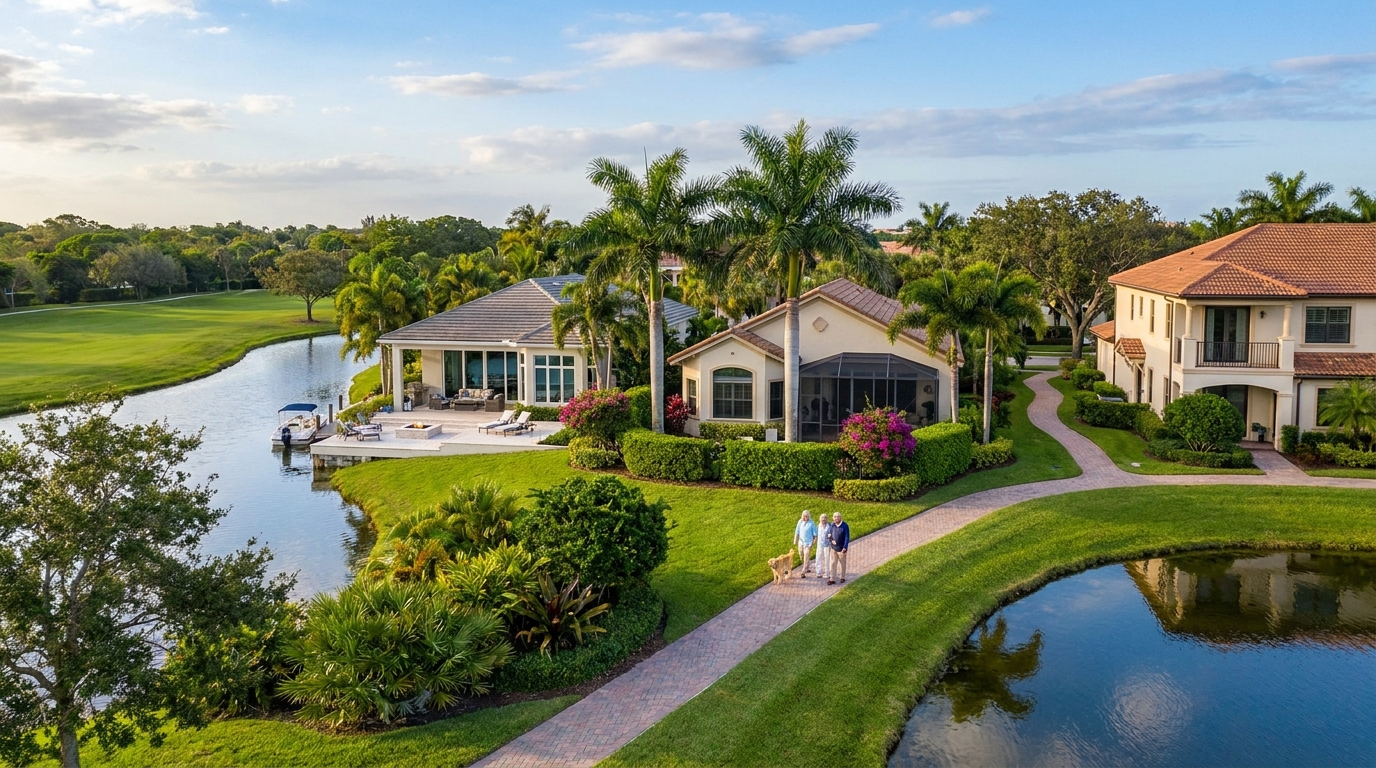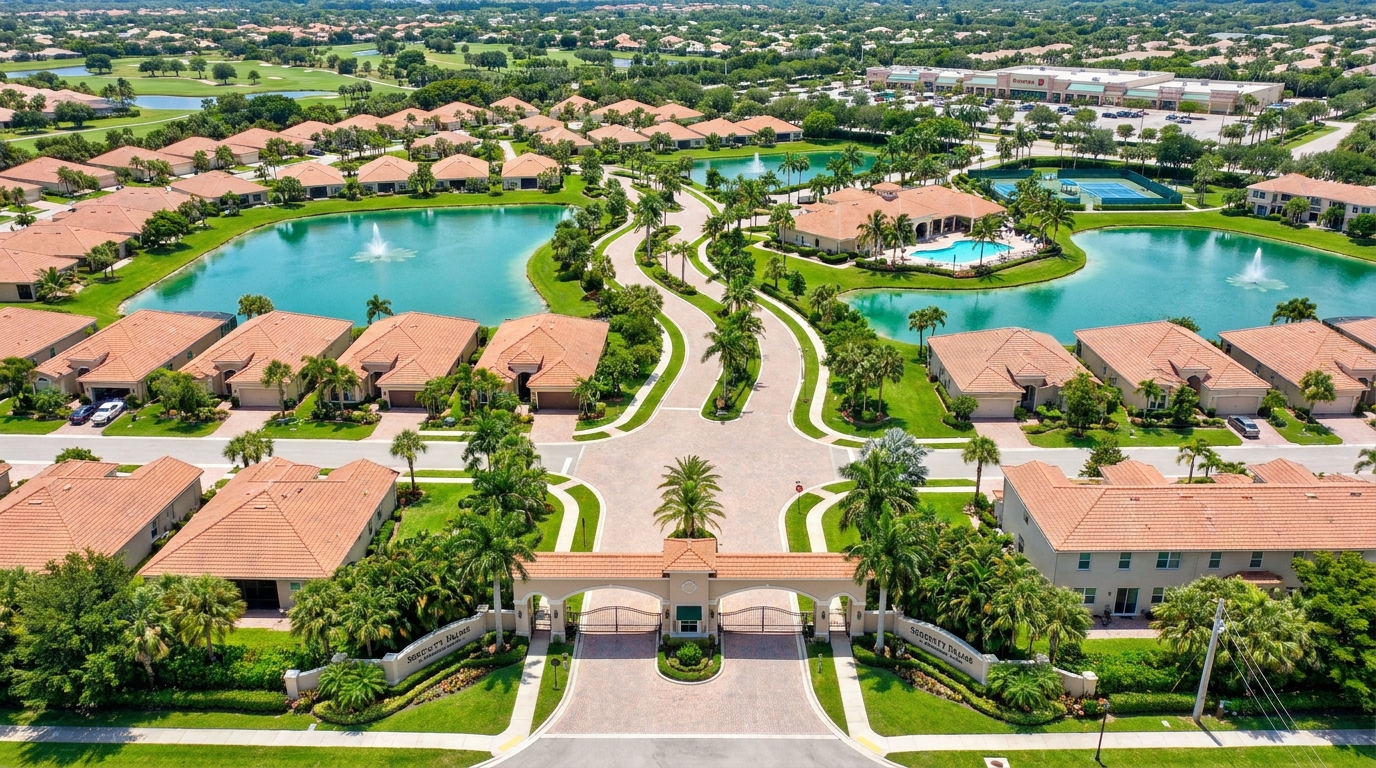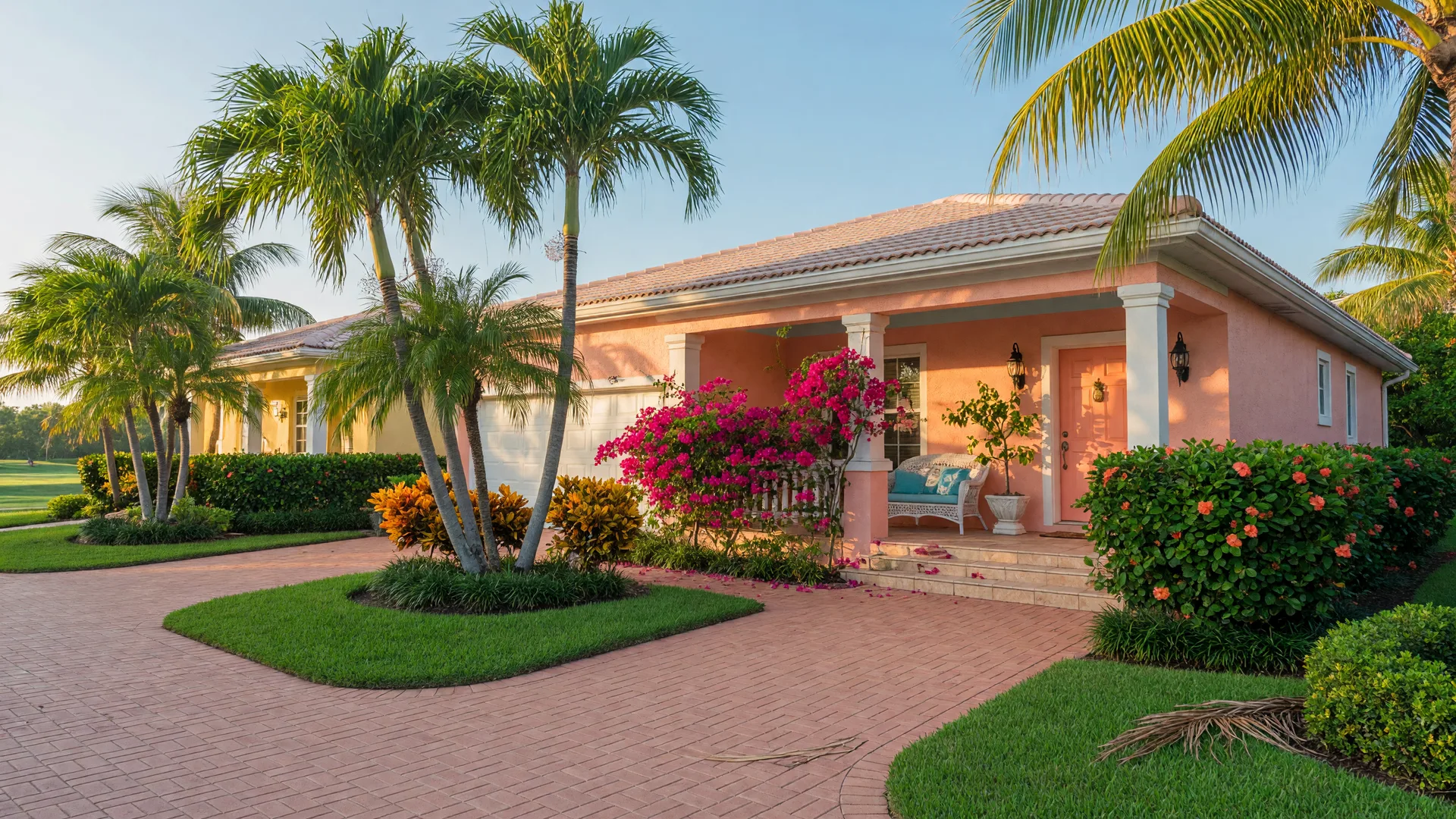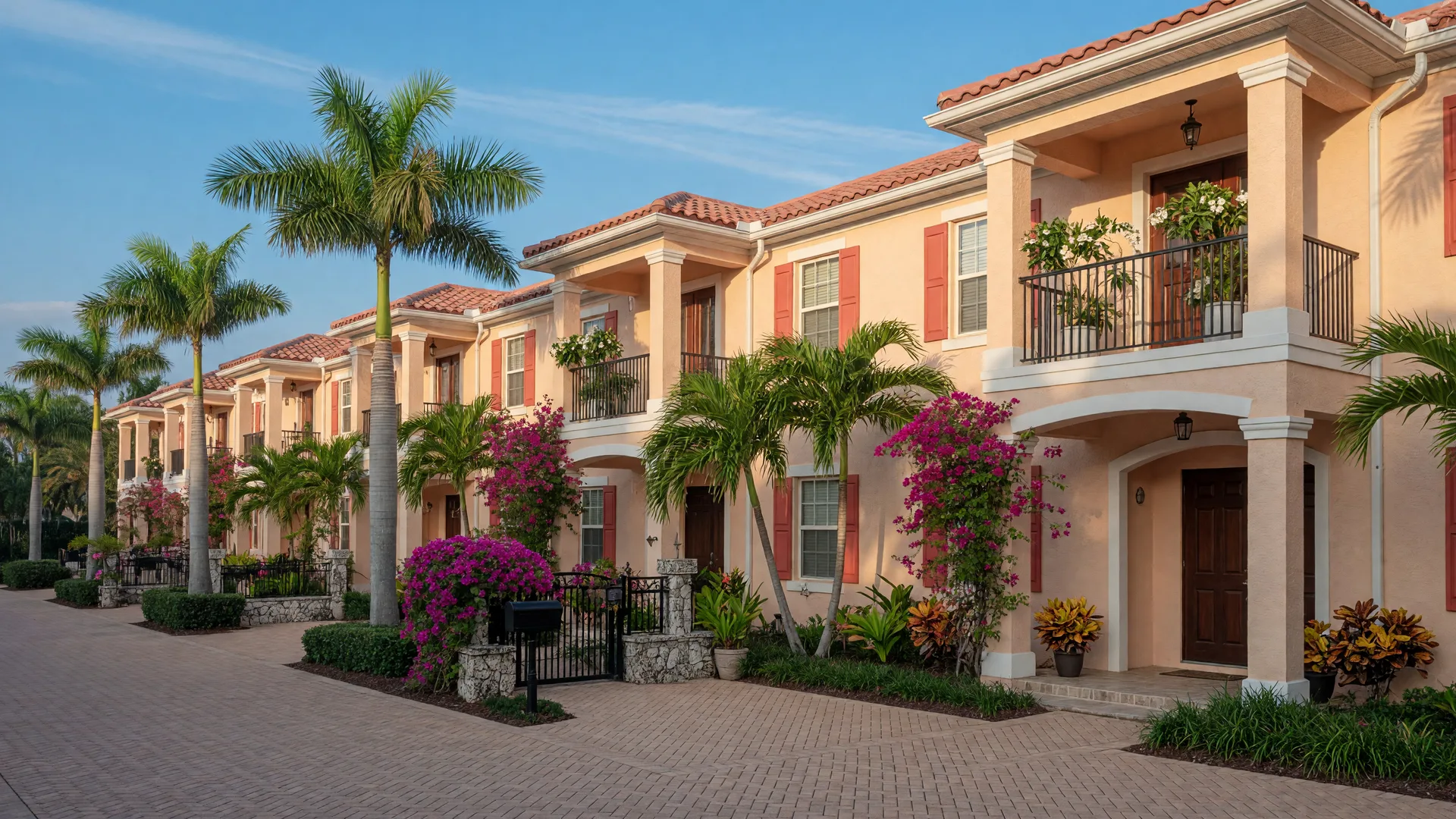
A townhome is a middle option between a villa and a condo: an attached, multi-level home with its own private entrance, usually a garage or small patio, and an association that takes care of most exterior maintenance. For downsizers in Palm Beach County, townhomes offer more interior space than most condos while removing the biggest outdoor chores of a single-family home.
The most important thing to understand is that "townhome" describes the building style, not the legal structure. In Florida, a townhome community is governed either by the Condominium Act, Chapter 718 of the Florida Statutes, or by the Homeowners' Association Act, Chapter 720, depending on the declaration recorded for that community. That single document shapes your fees, your insurance, your maintenance responsibilities, and your experience when you sell.
Hi, I am Rhonda Townsend, a REALTOR with 1st Real Estate Solution Inc. For more than 12 years I have helped Palm Beach County homeowners compare home options and plan moves that fit the life they actually want to live. If you are early in the process, the downsizing roadmap shows where choosing a home type fits, and the Downsizing Resource Center has guides for every stage of the journey.
Key Takeaways
- Townhome communities in Florida are governed by either Chapter 718 or Chapter 720 law, and the recorded declaration, not the building style, decides which one applies.
- Association fees commonly cover exterior maintenance, landscaping, roofs, and common areas. In many Palm Beach County villa and townhome communities they run roughly $200 to $400 a month, with amenity-rich or condo-style communities often higher.
- Insurance depends on ownership: freehold townhomes typically use an HO-3 policy, condo-style townhomes an HO-6 policy, and the association's master policy never covers your interior finishes or personal belongings.
- Most townhome floor plans have two or three levels, so stairs are a real consideration. Single-story villas and garden condos are the alternatives if one-level living matters most.
- Ask for the declaration, bylaws, rules, reserve study, and recent meeting minutes before you make an offer, and confirm the association's financial health.
What Is a Townhome, and How Does It Differ From a Villa or Condo?
A townhome is an attached residence that shares walls with its neighbors but keeps its own entrance, its own roofline in many communities, and often its own small yard or patio. Most townhome floor plans stack living space on two or three levels, which is why they can offer more square footage than a comparably priced condo.
Here is how the three most common downsizing options compare:
- Villa: usually a single-story attached or semi-detached home with a private entrance, popular with downsizers who want one-level living. Our villas guide covers the details.
- Condo: a unit inside a larger building, where you own the interior and the association owns the structure. See our condos guide.
- Townhome: an attached multi-level home with a private entrance and often a garage, where the association typically covers the exterior, roof, and common areas.
For a full side-by-side comparison of all three, including pros and cons for each, see our condo vs. villa vs. townhome post.
Are Townhome Communities Governed by HOA or Condo Law in Florida?
This is the question that surprises most buyers, because the answer is not visible from the street. In Florida, the recorded governing document determines the legal structure:
- Chapter 718 (Condominium Act) applies when the community is set up as a condominium, with a Declaration of Condominium recorded for the property. Owners co-own the structural elements, and the association maintains the buildings.
- Chapter 720 (Homeowners' Association Act) applies when the community is organized with covenants, conditions, and restrictions, which is the common structure for townhome and villa HOAs. Owners typically hold title to their lot and the attached structure, while the association manages common areas.
The distinction matters because Chapter 718 is far more prescriptive. Condominium buildings three or more habitable stories must complete structural integrity reserve studies (SIRS), milestone inspections are required as buildings age, and reserves for structural components must be fully funded and cannot be waived by owner vote. Chapter 720 HOA communities do not carry the same mandatory SIRS and milestone requirements, but the board still manages reserves, maintenance, and enforcement under the community's documents.
Before you make an offer, ask which chapter the association operates under, then review the declaration and recent financials. Our guide to HOA fees and condo associations explains what to look for in the documents, including reserves and special assessments.
What Do Townhome Association Fees Cover, and What Do They Cost?
In most townhome communities, the monthly fee covers the exterior maintenance that used to be your weekend job: landscaping, irrigation, common areas, and often roof repair and replacement. Some communities also bundle water, sewer, trash, or cable into the fee. What the fee usually does not cover is your interior, your personal property, and often your electricity, so read the budget to see exactly what is included.
Costs vary widely by community. In many Palm Beach County villa and townhome communities, HOA fees commonly run in the $200 to $400 per month range, while amenity-rich communities and condo-style townhome buildings can run $500 to $800 or more a month. Fees have been rising across Florida as insurance and reserve costs increase, so ask for the current budget, the reserve study, and the history of increases and special assessments before you commit.
Fees are only part of the picture. The cost of downsizing in Palm Beach County post shows how association fees, taxes, insurance, and utilities come together into one monthly number you can compare across communities.
How Does Townhome Insurance Differ From Condo Insurance?
Your insurance needs depend on what you own, which is set by the same governing documents that set your fees:
- Freehold townhome: if you own the land and the exterior of your unit, you typically need a standard homeowners policy, an HO-3, similar to a single-family home.
- Condo-style townhome: if the association owns the exterior and common elements, you typically need an HO-6 policy, similar to a condo unit, covering your interior, upgrades, personal property, and liability.
In both cases, the association's master policy covers the building exterior and common areas, but it never covers your interior finishes, your belongings, or your personal liability. In Florida, wind coverage and flood coverage deserve special attention, especially for coastal communities. Our insurance guide for downsizers and flood zone guide walk through the coverage types and what to ask before you buy.
What Are the Pros and Cons of Townhome Living for Downsizers?
Honest trade-offs help you choose with confidence. Here is what townhome living typically offers, and what it asks in return:
The benefits:
- More interior space than most condos, often with a garage
- A private entrance and a residential neighborhood feel
- Association handles exterior maintenance, roofs, and landscaping
- Lock-and-leave convenience for travel
- Often lower density than large condo buildings
The trade-offs:
- Stairs in most floor plans
- Shared walls with neighbors
- Fees can rise as insurance and reserve costs increase
- Some responsibilities, such as windows or doors, may fall to you depending on the declaration
- Resale value is tied to the financial health of the association
How Do Townhomes Compare With Villas and Condos?
| Consideration | Villa | Townhome | Condo |
|---|---|---|---|
| Typical levels | One | Two or three | One or more |
| Exterior maintenance | Association in most communities | Association in most communities | Association |
| Garage | Some | Common | Rare |
| Privacy | Good | Good | Less |
| Typical monthly fee in many communities | $200 to $400 | $200 to $400 or more | Often $400 to $800 or more |
These are planning ranges, not quotes. Fees vary widely by community, amenities, and the age of the buildings, so always confirm the current numbers for the specific communities on your shortlist. Our single-story homes guide is a good companion read if you are weighing stairs against space.
Where Can You Find Townhomes in Palm Beach County?
Townhome communities are found throughout the county, from the equestrian country of Wellington to the coastal towns of Jupiter and Palm Beach Gardens, with clusters in West Palm Beach, Boynton Beach, Delray Beach, and Lake Worth. The right community depends on your budget, your preferred pace of life, and how close you want to be to family, shopping, and the water.
Our Palm Beach County community guides cover each area in depth, including Wellington, West Palm Beach, Boynton Beach, and Palm Beach Gardens. When you tour townhome communities, ask the same questions at every stop so you can compare fairly: the fee and its history, what is included, reserve funding, rental rules, pet rules, and any pending special assessments.
What Should You Check Before Buying a Townhome?
- Confirm which Florida chapter governs the community, 718 or 720, and read the declaration.
- Review the current budget, the reserve study, and the last two years of meeting minutes.
- Ask about pending or recent special assessments and planned capital projects.
- Confirm what the master policy covers and what you must insure yourself.
- Check rental restrictions, pet rules, and any age restrictions only if the community is legally designated as age-restricted housing.
- Tour the actual floor plan and count the stairs; confirm where the laundry and primary bedroom are located.
- Ask about window, door, and appliance responsibilities under the declaration.
- Get insurance quotes for the specific unit before you make an offer.
- Compare the full monthly total, including fees, taxes, insurance, and utilities, across your shortlist.
The ultimate downsizing checklist ties these steps into the whole move, and the Sell and Buy Strategy page explains how I coordinate both sides of your transaction.
Let's Find the Right Townhome for Your Next Chapter
I can help you compare townhome communities, review association documents, and understand the full monthly cost before you commit. Request a no-obligation market analysis of your current home, schedule a free downsizing consultation, or download the Palm Beach County Downsizing Guide for the full step-by-step plan.
Frequently Asked Questions
Are townhomes governed by HOA or condo law in Florida?
Either one, depending on the community's recorded documents. If the community is organized as a condominium, Chapter 718 of the Florida Statutes applies. If it is organized with covenants and restrictions, Chapter 720 applies. Ask which chapter governs the community and read the declaration before you make an offer.
Do townhome HOA fees cover my roof and exterior?
In most townhome communities, yes: the fee covers exterior maintenance, landscaping, and often roof repair and replacement. But coverage varies by community, so review the budget and the declaration to see exactly what is included and what remains your responsibility, such as windows, doors, or appliances.
Do I need an HO-3 or HO-6 policy for a townhome?
It depends on what you own. A freehold townhome, where you own the land and exterior, typically needs an HO-3 homeowners policy. A condo-style townhome, where the association owns the exterior and common elements, typically needs an HO-6 policy. Your insurance agent can confirm the right form once you share the governing documents.
Are townhomes a good choice if I want one-level living?
Most townhome floor plans have stairs, so if one-level living is important to you, a single-story villa or a garden-style condo may fit better. Tour the actual floor plan and note where the primary bedroom and laundry are located before you decide.
Can I rent out a townhome if I travel?
Many associations have rental restrictions, including minimum lease terms, caps on the number of rentals, or bans on short-term rentals. Review the rental rules in the governing documents before you buy, especially if you plan to rent the property when you travel.
Sources
- Florida Legislature: Chapter 718, Florida Statutes (Condominium Act)
- Florida Legislature: Chapter 720, Florida Statutes (Homeowners' Association Act)
- Florida Office of Insurance Regulation
- Palm Beach County Property Appraiser
- U.S. Department of Housing and Urban Development: Fair Housing
- Florida Realtors
Disclaimer
This article is for general educational and real estate information purposes only. It does not provide legal, tax, financial, insurance, or property-inspection advice. Association documents, fees, reserves, insurance requirements, and community rules vary by property and change over time. Always review the current governing documents, confirm details with the association and licensed professionals, and consult official county and state sources before making decisions.

Written by Rhonda Townsend
1st Real Estate Solution Inc. Broker Associate · 12+ Years in Palm Beach County
Have questions about your downsizing journey? I'd love to have a conversation. No pressure, no obligation — just honest guidance from someone who understands.
Schedule a Free ConsultationRelated Reading
- Condo vs. Villa vs. Townhome: Choosing Your Next Home
- Villas in Palm Beach County: A Complete Guide
- Condos in Palm Beach County: A Complete Guide
- HOA Fees and Condo Associations
- Single-Story Homes for Downsizers
- Best Communities for Downsizing in Palm Beach County
- The Complete Guide to Downsizing in Palm Beach County