There is no universal winner between condos and villas for downsizing in Palm Beach County. The right choice depends on how you want to live: a condo delivers the smallest maintenance load and often the most convenient location, while a villa gives you a ground-floor home with your own front door, usually a small outdoor space, and fewer shared walls. The way to decide is to compare them on the things that actually shape your month: ownership rules, fees, insurance, upkeep, layout, and community.
Both options are popular with homeowners who are selling a larger home and moving to something easier to manage, and both usually sit inside an association that looks after the exterior and common areas. The real differences show up in the details: how the monthly fee is structured, what kind of insurance you carry, whether you share walls, and how much outdoor space comes with the door.
Hi, I am Rhonda Townsend, a Realtor with 1st Real Estate Solution Inc.. For more than 12 years I have helped Palm Beach County homeowners weigh condos, villas, and other low-maintenance homes, and the honest answer is that the right pick is the one that matches your routines, your budget, and the community you want to live in. If you are early in the process, the downsizing roadmap shows where this decision fits, and the Downsizing Resource Center has complete guides to both home types.
Key Takeaways
- Condos and villas are both association-managed, low-maintenance homes, but they are governed differently under Florida law: Chapter 718 for condos, Chapter 720 for most villa homeowners associations.
- A condo usually means the least exterior responsibility, while a villa usually means ground-floor living, your own entrance, and a small outdoor space.
- Compare the full monthly picture, not just the purchase price: the association fee, property taxes, insurance, and the association's reserves all belong in the math.
- The buying process differs. Florida law gives condo buyers specific documents and a cancellation window; villa purchases run through HOA documents and a different review path.
- Shortlist communities first. In many Palm Beach County towns, villas and condos cluster in different areas, so the neighborhood often narrows the choice for you.
How Do Condos and Villas Differ in Ownership and Structure?
In Florida the difference is legal as much as architectural. A condominium is ownership of a unit plus a share of the common areas, governed by the Florida Condominium Act in Chapter 718 of the Florida Statutes. The association owns and maintains the building exterior, the common areas, and the amenities, and each unit owner pays an assessment for their share.
A villa is usually a single-story or one-and-a-half-story home, attached or detached, that shares ownership of common areas with neighbors through a homeowners association. Villas are most often governed by Chapter 720 of the Florida Statutes, the law for HOAs, rather than the Condominium Act. The association may handle the roof, exterior paint, landscaping, and common areas, while the villa itself is legally more like a house than a condo unit, which changes insurance and financing.
| Factor | Condo | Villa |
|---|---|---|
| Ownership | Unit plus shared common areas, under Chapter 718 | Attached or detached home with HOA common areas, usually under Chapter 720 |
| Structure | Unit inside a multi-unit building, with shared walls, floors, and ceilings | Ground-floor home with its own entrance; may share a wall with a neighbor |
| Outdoor space | Balcony, patio, or none | Small yard or patio, often maintained by the association |
| Exterior upkeep | Usually fully handled by the association | Roof and exterior usually handled by the association; yard duties vary |
| Monthly fee | Covers common areas, building maintenance, master insurance, and reserves | Covers neighborhood common areas and amenities; building coverage varies |
| Insurance | Personal HO-6 policy plus the association's master policy | Homeowners policy for the structure you own, closer to a small house |
| Buying process | Florida condo documents and cancellation rights apply | HOA documents to review under a different legal framework |
Our complete condo guide and villa guide go deep on each home type, and the older condo versus villa versus townhome comparison rounds out the field with townhomes.
How Do the Monthly Costs Compare Between a Condo and a Villa?
The sticker price is only the beginning. After a downsizing move, the monthly number is what you live with, and it is built from the association fee, property taxes, insurance, utilities, and the association's reserves.
Condo assessments in Palm Beach County vary widely by building because every one bundles different things: high-rise towers with elevators, staff, and resort amenities carry higher fees than garden-style buildings, while boutique complexes keep costs leaner. The fee usually covers the master insurance policy, exterior maintenance, common-area utilities, and reserves, which is why it can feel substantial. Villa HOA fees are often lower than a full-service condo assessment because they typically cover less: neighborhood common areas, landscaping, and community amenities, with the villa owner carrying more of the structure's insurance directly.
Insurance moves in the opposite direction. A condo owner carries an HO-6 policy for personal belongings and interior finishes, because the building's master policy covers the structure. A villa owner carries a homeowners policy for the home itself, much like a small house, so the villa premium is usually the larger of the two. Flood insurance is separate for both when the property sits in a special flood hazard area. The insurance guide for downsizers explains the policy types in detail, and our HOA fees and special assessments guide walks through reserves, fee structures, and the questions worth asking before you commit.
Which Is Easier to Maintain: a Condo or a Villa?
Condos consistently offer the least hands-on upkeep. The association handles the roof, the exterior, the landscaping, and the common areas, and your responsibility runs roughly from the walls inward. For frequent travelers, that lock-and-leave convenience is a major draw: the building is maintained and watched while you are away.
A villa sits a half-step away from that. In most villa communities the association still manages the roof, the exterior paint, and the neighborhood grounds, which removes the biggest homeowner chores, but you often keep a small outdoor space and the duties that come with it. Some villa HOAs include lawn care and irrigation in the fee; others expect the owner to handle the beds, the edge of the yard, or the walkway. The answer lives in the specific association's documents, which is why the fee-by-fee comparison matters. Our low-maintenance living guide rates each home type on the upkeep it demands.
How Do Privacy, Space, and Layout Differ?
Layout is where the two options really split. Condos are stacked: you have neighbors above, below, and beside you, and the shape of your home is fixed by the building. Some downsizers love the energy of a tower and the views that come with height. Others find shared walls and elevator living less comfortable than a home on the ground.
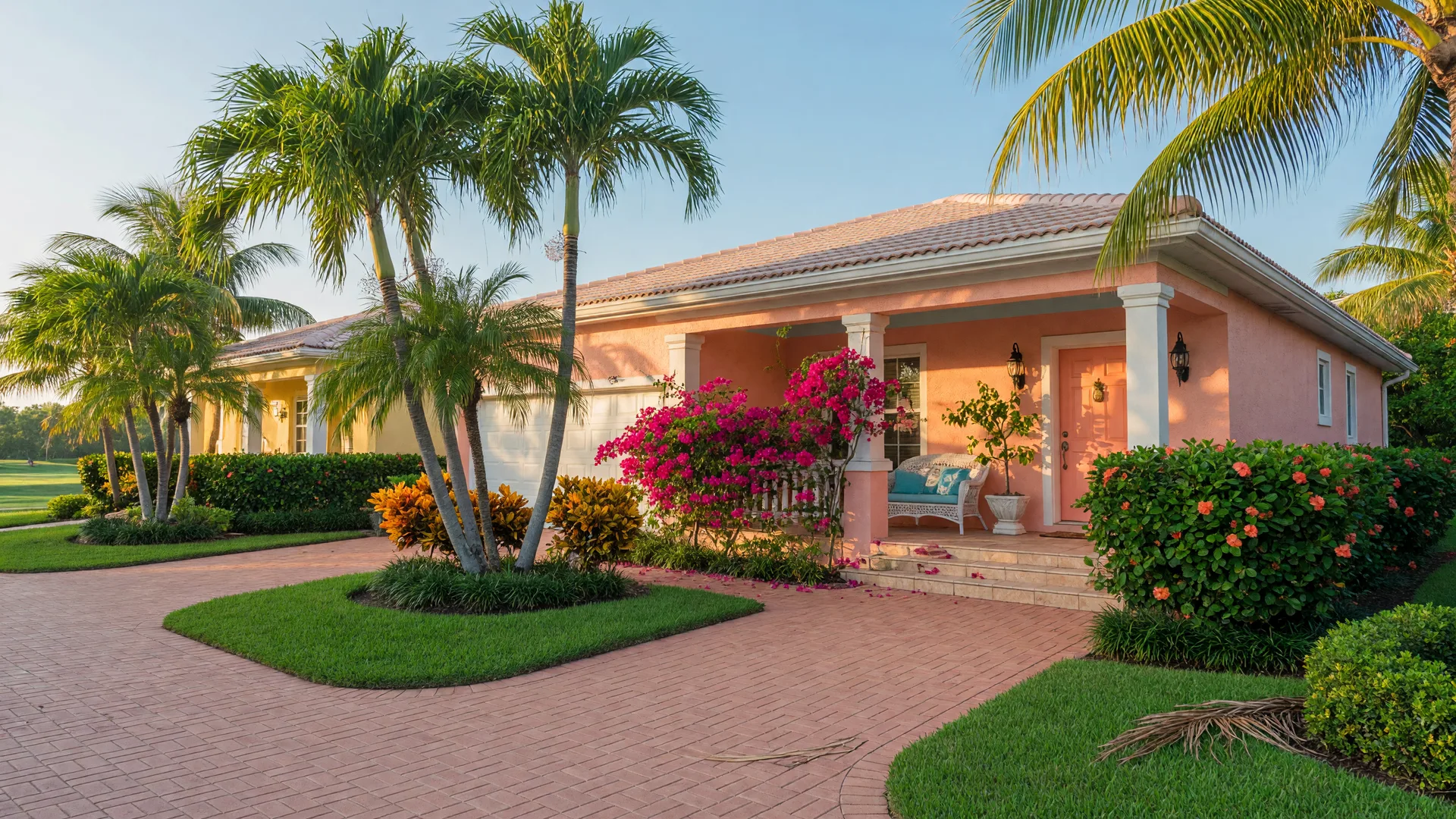
Villas answer that by putting everything on one level. They are built as single-story homes, which makes every room easier to reach and is one reason they appear so often in downsizing conversations, and they usually open onto a porch, patio, or small yard. You may still share a wall in an attached villa, but you keep your own front door, your own outdoor space, and a layout that feels like a house rather than an apartment. For the full case on one-level living, see our single-story homes guide.
Where Are Condos and Villas Common Around Palm Beach County?
Community often decides the home type before the home type decides the community. Along the coast and around the county's urban cores, condos dominate: West Palm Beach's waterfront and downtown high-rises, the mid-rise and garden complexes of Boynton Beach, Delray Beach, and Lake Worth Beach, and the towers and resort communities of Jupiter, North Palm Beach, and Palm Beach Gardens. If you want to live steps from the water, the Intracoastal, or a walkable downtown, a condo is usually the way in.
Villas cluster in the county's established residential communities, both coastal and inland. Wellington and Boynton Beach are full of attached and detached villa neighborhoods, as are West Palm Beach and many gated communities in Palm Beach Gardens and Lake Worth. For downsizers set on waterfront views, the waterfront downsizing guide covers both options along the coast, and the best communities for downsizing article helps you shortlist towns by lifestyle first.
How Is the Buying Process Different for a Condo Versus a Villa?
Florida treats condo purchases as a separate category with extra protections. Under Florida Statute 718.503, a condo seller must provide a package of documents, including the declaration, bylaws, rules, the latest year-end financials, and the approved budget, and on a resale the buyer keeps the right to cancel for seven business days after signing and receiving them. New construction from a developer carries a longer 15-day window. Higher buildings also fall under Florida's milestone structural inspection and structural integrity reserve study rules, so building age and the association's inspection records belong on your checklist. Our condo guide covers every document and deadline.
Villa purchases run through the homeowners association instead. The HOA provides its declaration, covenants, rules, budget, and financials, but the statutory condo package and its built-in cancellation window do not apply, so your due diligence relies on reading the documents yourself with your Realtor and attorney before signing. The difference reinforces a habit either way: never let the association paperwork be an afterthought. Our making-an-offer guide shows how to build the contract around the documents, and the financing guide covers how sale proceeds and loans come together for either purchase.
A Condo vs. Villa Decision Checklist
- Decide how much hands-on upkeep you want, and be honest about travel plans and yard preference.
- Pull the association fee, the current budget, and the reserve balance for every community on your shortlist.
- Compare full monthly costs: fee, property taxes, insurance quote, utilities, and any flood premium.
- Read the rules that matter to you: rentals, pets, guest policies, parking, and board elections.
- Check building age and inspection records for condos three or more stories, and the reserve study for the community.
- Visit at different times of day and talk with current residents about noise, management, and community life.
- Confirm who maintains every outdoor space in a villa community: the association or the owner.
- Review the condo document package with your attorney inside the cancellation window, or the HOA documents before you sign.
- Get pre-approved and know your sale proceeds before you write an offer.
For a step-by-step view of where the condo or villa decision fits into the whole move, the home options page compares all of the home types, and the sell and buy strategy page explains how I coordinate the sale and the purchase on one timeline.
Compare Condos and Villas With a Local Guide
The right answer comes from comparing real communities, real fees, and real buildings side by side. I can walk you through the villas and condos that fit your budget and lifestyle across Palm Beach County, review documents with you, and keep the whole move on one timeline. Schedule a free downsizing consultation, send me a message, or download the Palm Beach County Downsizing Guide for the full step-by-step plan.
Frequently Asked Questions
Is a villa basically a small house?
In practical terms, yes. A villa is a single-story home, attached or detached, with its own entrance, owned through a homeowners association that manages common areas and often the exterior. It feels like a house but without most of the exterior chores, which is why it suits so many downsizing moves.
Which is cheaper month to month, a condo or a villa?
There is no uniform answer. Condo assessments are often higher but bundle more, including master building insurance, while villa HOA fees are typically lower but cover less, with a larger homeowners insurance premium on the villa itself. The only reliable method is comparing the full monthly picture for a specific property: fee, taxes, insurance, utilities, and reserves.
Do I get the same cancellation rights on a villa purchase as a condo?
No. The statutory condo document package and the seven-business-day resale cancellation window come from the Florida Condominium Act, which does not cover villas governed by a homeowners association. On a villa you review the HOA documents with your Realtor and attorney before signing, so do not let the paperwork become an afterthought.
Can I rent out a condo or villa later?
It depends entirely on the association. Condo buildings often cap the number of units that can be rented, and HOAs may limit leases or require board approval. The rules are in the declaration and bylaws, so read them before you buy if renting is part of your plan, because lease caps are difficult to change once you own.
Which resells more easily, a condo or a villa?
Demand varies by community, building, and price point, so there is no universal rule. What holds true everywhere is that well-managed associations, healthy reserves, accurate pricing, and homes that show well attract attention in any market. Review recent sales in the specific community with your Realtor to see the demand picture before you buy.
Sources
- Florida Statutes, Section 718.503: Requirements for contracts for sale of condominium parcels
- Florida Statutes, Section 718.112: Bylaws, structural integrity reserve studies
- Florida Statutes, Section 553.899: Milestone structural inspections
- Division of Florida Condominiums, Timeshares, and Mobile Homes, DBPR
- Florida Realtors: Florida HOA and Condominium Laws
- Florida Realtors Market Reports
- Palm Beach County Government
- Palm Beach County Property Appraiser
Disclaimer
This article is for general educational and real estate information purposes only. It does not provide legal, tax, financial, or insurance advice. Condominium and homeowners association documents, fees, reserves, insurance requirements, and building regulations vary by property and change over time. Always review the current association documents for the specific property, confirm building inspection records, obtain quotes from licensed professionals, and consult licensed advisors for guidance tailored to your situation.

Written by Rhonda Townsend
1st Real Estate Solution Inc. Broker Associate · 12+ Years in Palm Beach County
Have questions about your downsizing journey? I'd love to have a conversation. No pressure, no obligation — just honest guidance from someone who understands.
Schedule a Free ConsultationRelated Reading
- Condos in Palm Beach County: A Complete Guide
- Villas in Palm Beach County: A Complete Guide
- Condo vs. Villa vs. Townhome: Choosing Your Next Home
- HOA Fees and Condo Associations
- Insurance Guide for Downsizers
- How to Finance Your Next Home After Downsizing
- The Complete Guide to Downsizing in Palm Beach County